




How to Choose a Rock Bucket for Skid Steer Soil and Debris Removal
Removing rocks, roots, broken concrete and other unwanted material from soil can turn a straightforward grading or landscaping job into a slow cleanup operation. A standard bucket can move the material, but it does not separate larger debris from the finer soil. That is where a rock bucket for skid steer can provide a practical advantage.
A rock bucket uses an open skeletal design and reinforced tines to retain larger objects while allowing loose soil and smaller material to fall through. This makes the attachment useful when the goal is not simply to excavate material, but to separate rocks and debris from usable soil.
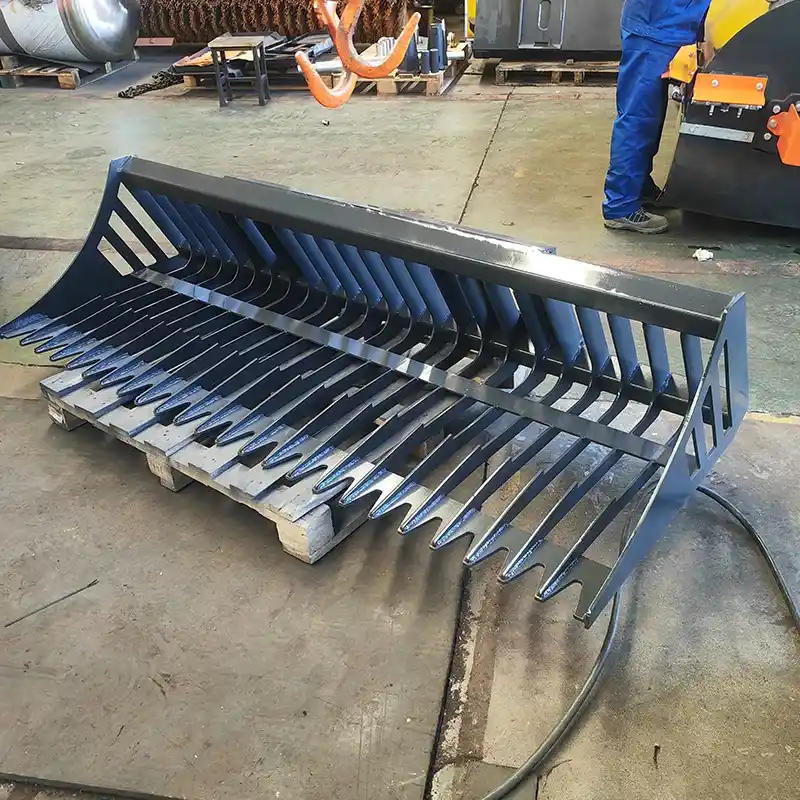
HCN's 0101 Rock Bucket is designed around this principle. The attachment is intended for contractors, landscapers, agricultural users and property owners who need to clear rocks and unwanted objects while leaving finer material behind. Its skeletal construction also gives the operator visibility toward the working edge, which can be useful when working close to the ground.
What Is a Skid Steer Rock Bucket?
A skid steer rock bucket is a specialized attachment designed to collect rocks, debris and other larger objects while allowing loose soil to pass between the bucket tines.
Unlike a conventional solid bucket, the bottom of a rock bucket is formed by spaced structural tines. When the attachment is lowered into soil and then lifted, larger objects remain inside the bucket while loose material falls through the openings.
This simple operating principle makes a rock bucket particularly useful for cleanup and separation work. Instead of repeatedly loading a mixture of soil and rocks into a pile and manually sorting it, the operator can perform much of the separation directly with the skid steer.
How the Separation Process Works
Lower the rock bucket toward the material or ground surface.
Position the tines beneath or around the rocks and unwanted objects.
Lift the attachment while maintaining a controlled bucket position.
Larger rocks and debris remain supported by the tines.
Loose soil and smaller particles fall through the openings.
Carry the retained material to a designated disposal or stockpile area.
The result is a simple mechanical screening process that combines material collection and separation in one attachment.
Why Use a Rock Bucket Instead of a Standard Bucket?
A standard bucket remains the right choice for many digging, loading and carrying operations. However, it is not designed primarily for separating rocks from soil.
When a solid bucket is used for rock removal, the operator may collect a large amount of usable soil along with the rocks. That increases the volume of material that must be transported or rehandled.
A rock bucket approaches the job differently. Its open structure allows loose soil to fall away while retaining larger objects. This can reduce unnecessary handling and make cleanup more efficient when the material conditions are suitable.
Rock Removal
Rock removal is one of the most obvious applications. Contractors can use a rock bucket to collect stones from construction areas, landscaping projects, farm fields and other surfaces where rocks interfere with subsequent work.
Jobsite Cleanup
Construction sites often contain mixed debris after excavation, demolition or grading. A rock bucket can be useful for collecting larger pieces of debris while allowing loose soil to fall through the tines.
Landscaping Preparation
Landscaping projects may require a clean and workable soil surface before planting, grading or installing hardscape materials. Removing larger rocks and debris can help prepare the area for the next stage of the project.
Agricultural Field Cleanup
Fields can contain naturally occurring rocks or material exposed by previous cultivation and earthmoving work. A rock bucket can help gather these larger objects without carrying the same amount of loose soil as a conventional bucket.
Where Does a Rock Bucket Work Best?
The best applications are generally those where the operator needs to remove larger objects from relatively loose or workable material.
Construction site cleanup
Landscaping preparation
Farm field rock removal
Property maintenance
Land clearing and surface cleanup
Removal of surface vegetation and debris
Cleanup around construction and grading areas
HCN describes the 0101 Rock Bucket as suitable for clearing rocks and debris from jobsites, preparing land for landscaping, removing rocks from farm fields and clearing debris for property maintenance.
The attachment can also work above ground to remove surface vegetation and unwanted objects and can be used below ground to pull objects from the soil. This gives the attachment a broader role than simply collecting loose stones.
Key Features to Look for in a Rock Bucket
Not every rock bucket is built for the same type of work. When comparing attachments, focus on the structure, tine arrangement, working width, machine compatibility and visibility.
1. Tine Spacing
Tine spacing has a direct effect on what the attachment retains and what falls through. Wider openings can allow more material to pass through, while closer spacing can retain smaller objects.
The correct configuration depends on the material you are handling. A contractor removing large rocks from loose soil may have different requirements from a landscaper cleaning a site containing mixed construction debris.
2. Reinforced Tines
Rock removal places significant mechanical stress on the bucket structure. Tines may encounter buried rocks, compacted material and uneven loads.
HCN's 0101 Rock Bucket uses gusseted tines and interconnected tine construction to increase strength and durability. The skeletal structure is designed for demanding operating conditions while maintaining visibility toward the working area.
3. Bucket Width
Working width affects both productivity and maneuverability. A wider attachment can cover more ground per pass, but the skid steer must also have sufficient capacity and hydraulic performance to handle the attachment safely.
HCN lists multiple 0101 Rock Bucket models, including Mini010140, Mini010148, 010160, 010172 and 010184. The published overall widths range from 1,015 mm to 2,190 mm, allowing the product family to cover different machine and application requirements.
4. Operator Visibility
Visibility becomes particularly important when removing rocks close to finished surfaces, landscaping features, buildings or other obstacles.
The skeletal design of a rock bucket can help the operator see the attachment's working edge more easily than a fully enclosed structure. Better visibility can make it easier to position the tines accurately and reduce unnecessary passes.
5. Structural Strength
A rock bucket should be evaluated as a structural attachment rather than simply as a container. The tines, mounting frame and supporting structure must withstand repeated contact with hard objects.
For contractors who use the attachment frequently, durability can be more important than simply choosing the largest available bucket.
HCN 0101 Rock Bucket Specifications
The HCN 0101 Rock Bucket is available in several sizes. According to HCN's published product information, the lineup includes five models with different overall widths and weights.
| Model | Overall Width | Overall Length | Overall Height | Weight |
|---|---|---|---|---|
| Mini010140 | 1,015 mm | 790 mm | 500 mm | 80 kg |
| Mini010148 | 1,245 mm | 790 mm | 500 mm | 100 kg |
| 010160 | 1,580 mm | 945 mm | 700 mm | 255 kg |
| 010172 | 1,890 mm | 945 mm | 700 mm | 290 kg |
| 010184 | 2,190 mm | 945 mm | 700 mm | 330 kg |
These specifications should be considered together with the host machine's rated operating capacity, attachment compatibility and job requirements. A larger bucket is not automatically the better choice if the machine cannot operate it efficiently.
How to Choose the Right Rock Bucket for a Skid Steer
The most useful way to select a rock bucket is to start with the material and the job rather than the attachment size alone.
Step 1: Identify the Material
Determine what you actually need to remove. Are you collecting large rocks from soil, clearing construction debris, or preparing a landscaping area?
Material size and density influence the required tine configuration and bucket size.
Step 2: Check Your Skid Steer's Capacity
Confirm that the skid steer can safely handle the attachment's weight and the expected payload. The bucket itself is only part of the total operating load.
Machine rated operating capacity, hydraulic specifications and attachment mounting compatibility should all be reviewed before purchase.
Step 3: Consider Working Width
For large open areas, a wider attachment can reduce the number of passes required. For confined landscaping areas, a narrower model may offer better maneuverability.
Step 4: Consider Transport and Access
If the attachment will be transported frequently or used around gates, buildings and narrow access routes, overall dimensions should be part of the buying decision.
Step 5: Match the Attachment to the Job Frequency
A contractor performing rock removal every week may prioritize structural durability and productivity. An occasional property-maintenance user may place greater emphasis on attachment size, storage and versatility.
Rock Bucket vs. Grapple Bucket: Which One Do You Need?
Rock buckets and grapple buckets can both handle debris, but they solve different material-handling problems.
A rock bucket is primarily intended to separate larger rocks and unwanted objects from loose material. The open tine structure allows soil to fall through.
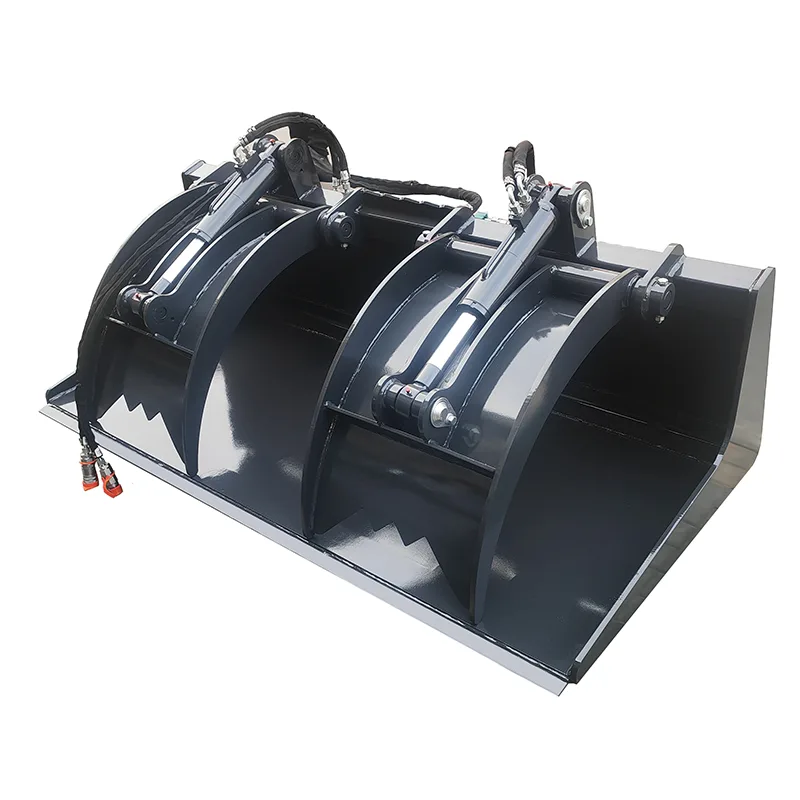
A grapple bucket is more focused on gripping and securing irregular materials. HCN's 0403 Series Heavy Duty Grapple Bucket, for example, uses a dual-cylinder grapple configuration and is designed for handling bulky or difficult-to-manage materials. Its fork-bottom configuration can also leave valuable dirt behind when handling larger materials.
If the main problem is separating rocks from soil, a rock bucket is generally the more direct attachment concept. If the main problem is grabbing brush, logs, bulky debris or irregular materials, a grapple-style attachment may be more appropriate.
Rock Bucket vs. Standard Heavy-Duty Bucket
A standard heavy-duty bucket is better suited to digging, loading, carrying and dumping bulk material. HCN's 0103 Series Heavy Duty Bucket is built around these conventional bucket functions and includes options such as bolt-on teeth, a cutting edge and other bucket accessories.
A rock bucket serves a different purpose. Its open design is specifically useful when separation is more important than retaining every part of the excavated material.
For a contractor who regularly performs both tasks, owning or renting the appropriate attachment for each phase of the project can be more productive than trying to make one bucket perform every function.
Operating Tips for Better Rock Removal
Keep the Attachment Under Control
A rock bucket works through controlled movement rather than aggressive digging. Avoid forcing the attachment into material beyond what the skid steer and bucket are designed to handle.
Use the Tines to Your Advantage
The attachment is most effective when the spacing between the tines can allow loose material to fall through. Avoid treating the rock bucket exactly like a solid digging bucket.
Watch the Load
Large rocks can create concentrated loads. Keep the load stable and within the operating limits of the host machine.
Work in Manageable Passes
Trying to clear too much material in one pass can reduce control and increase unnecessary stress on the attachment. Smaller, controlled passes often make separation easier.
Inspect the Attachment Regularly
Check the tines, mounting points and structural components for damage or excessive wear, particularly after working in heavily rocky ground.
When a Rock Bucket May Not Be the Best Choice
A rock bucket is a specialized attachment, so it is important to recognize its limitations.
If the main task is moving large volumes of loose soil, a conventional bucket may provide better loading efficiency. If the job involves cutting pavement or concrete, a cold planer is a more appropriate tool. If the work involves gripping logs or irregular brush, a grapple attachment may be more suitable.
The best attachment is therefore determined by the material and the operation. The goal should be to match the attachment to the dominant task rather than choosing equipment based only on bucket size.
Why a Rock Bucket Can Be Valuable for Landscaping and Construction
The main advantage of a rock bucket is its ability to combine collection and separation. Instead of moving a mixture of soil and rocks repeatedly, the operator can remove larger unwanted objects while allowing loose soil to fall through.
For landscaping contractors, this can be useful during site preparation. For agricultural users, it can help with field rock removal. For construction contractors, it can support cleanup and material separation after grading or excavation.
The attachment also expands what a skid steer can accomplish without requiring a dedicated rock-removal machine. This is one reason specialized attachments can be valuable additions to a contractor's equipment fleet.
HCN Rock Bucket for Professional Applications
HCN's 0101 Rock Bucket is designed around a straightforward objective: retain rocks and debris while allowing finer material to pass through the skeletal structure.
The published design includes gusseted and interconnected tines for added strength, an open skeletal structure for operator visibility, and multiple size options ranging from compact models to wider attachments. These characteristics make the product suitable for different site-cleanup, landscaping, agricultural and property-maintenance applications.
For buyers comparing a rock bucket attachment for skid steer equipment, the most important considerations remain the same: material type, tine spacing, attachment width, machine compatibility, structural strength and the type of work performed most frequently.
Rather than choosing an attachment based only on its dimensions, contractors should evaluate how the bucket will interact with the material and how efficiently it can complete the entire cleanup cycle.
Final Buying Checklist
Identify the size and type of rocks or debris to be removed.
Determine whether soil separation is an important part of the job.
Check skid steer attachment compatibility.
Verify machine operating capacity and attachment weight.
Compare available bucket widths.
Consider tine spacing and structural design.
Evaluate operator visibility around the working edge.
Choose a grapple or conventional bucket instead if the primary task requires gripping or bulk material loading.
A well-matched skid steer rock bucket can turn a difficult cleanup task into a more controlled material-separation operation. For contractors and property managers dealing with rocks, debris and unwanted objects in soil, the attachment is worth considering when separation is as important as collection.
Frequently Asked Questions About Rock Buckets
1. What is a rock bucket used for on a skid steer?
A rock bucket is used to collect rocks, debris and other larger unwanted objects while allowing loose soil and smaller material to fall through the bucket's open tines. Common applications include landscaping, construction site cleanup, agricultural field rock removal and property maintenance.
2. Can a rock bucket remove rocks from soil?
Yes. A rock bucket is specifically designed for this type of separation. The tines retain larger rocks while loose soil can pass through the openings as the attachment is lifted and handled.
3. What is the difference between a rock bucket and a grapple bucket?
A rock bucket is primarily designed for separating rocks and debris from loose material. A grapple bucket focuses more on gripping and securing bulky or irregular objects such as brush and other difficult-to-handle materials.
4. Is a rock bucket good for landscaping?
Yes. Rock buckets can be useful for preparing landscaping sites by removing rocks, debris and unwanted surface material before grading, planting or other landscape work.
5. Can a rock bucket be used on farm fields?
Yes. Rock removal from agricultural fields is one of the applications for which a rock bucket can be useful. The open tine design allows loose soil to pass through while retaining larger rocks.
6. How do I choose the right size rock bucket?
Start with the size and capability of the skid steer, then consider the working area, material type, required bucket width and attachment weight. Larger is not always better if the host machine cannot handle the attachment efficiently.
7. Can a rock bucket replace a standard skid steer bucket?
Not in every application. A standard bucket is generally more appropriate for conventional digging, loading, carrying and dumping. A rock bucket is specialized for collecting larger objects while allowing finer material to pass through.
8. What should I inspect on a rock bucket?
Regularly inspect the tines, mounting points and structural components for bending, cracking, excessive wear or other damage. Particular attention should be given after working in heavily rocky or abrasive ground.
Recommended HCN Internal Links
0101 Rock Bucket: Main product page for the attachment discussed in this article — https://www.hcn-tech.com/list_7/31.html
0403 Series Heavy Duty Grapple Bucket: Recommended comparison link for readers looking for an attachment for gripping bulky materials — https://www.hcn-tech.com/list_6/34.html
0103 Series Heavy Duty Bucket: Useful alternative for readers primarily interested in digging, loading and carrying — https://www.hcn-tech.com/list_7/32.html
Heavy Duty Four In One Bucket: Relevant internal link for users looking for a more versatile bucket attachment capable of loading, grappling, dozing and leveling — https://www.hcn-tech.com/list_6/35.html
Image Suggestions
Image Description: A skid steer equipped with a skeletal rock bucket collecting large rocks from loose soil on a construction site.
Recommended File Name: skid-steer-rock-bucket-soil-removal.jpg
ALT Text: Skid steer rock bucket removing rocks from loose soil
Recommended Placement: Below the introduction```
Image Description: Close-up view of reinforced rock bucket tines separating rocks from fine soil.
Recommended File Name: rock-bucket-tines-soil-separation.jpg
ALT Text: Rock bucket tines separating rocks from soil
Recommended Placement: Under “How the Separation Process Works”Image Description: Landscaping contractor using a skid steer rock bucket to prepare a site before grading and planting.
Recommended File Name: rock-bucket-landscaping-site-preparation.jpg
ALT Text: Skid steer rock bucket used for landscaping site preparation
Recommended Placement: Under “Where Does a Rock Bucket Work Best?”Image Description: Side-by-side visual comparison of a rock bucket, grapple bucket and standard heavy-duty bucket in a professional equipment yard.
Recommended File Name: skid-steer-bucket-attachment-comparison.jpg
ALT Text: Skid steer rock bucket grapple bucket and standard bucket comparison
Recommended Placement: Under “Rock Bucket vs. Grapple Bucket”Image Description: Skid steer carrying a loaded rock bucket away from a cleared agricultural field or construction area.
Recommended File Name: skid-steer-rock-removal-attachment.jpg
ALT Text: Skid steer carrying rocks with a removal attachment
Recommended Placement: Before the final conclusion
 +86 185 5285 3111
 +86 185 5285 3111
 nancy@hcn-tech.com
